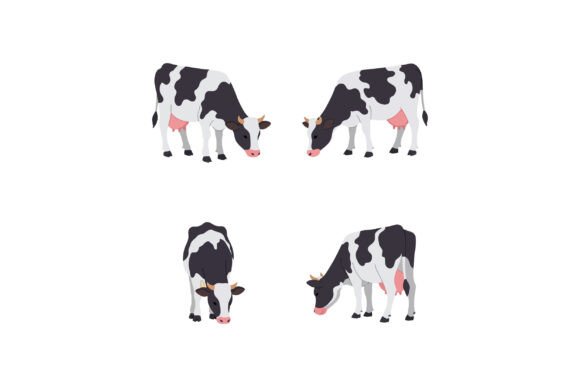
Cow Vector Illustrations Graphics for T-Shirt Print
When I first downloaded Cow Vector Illustrations for T-shirt Pri, I already had a specific use case in mind: a new farmhouse-inspired collection for my print-on-demand shops and Etsy digital download store. The name is a little cryptic — “Pri” almost certainly means “Print” — but the asset itself is refreshingly straightforward. You get a folder of cheerful black and white dairy cows in a variety of poses, each one cleanly drawn with a playful, slightly rustic character. As a graphic design asset, it lands somewhere between cute nursery decor and vintage farm branding, which immediately opens up a lot of commercial design possibilities.
My first impression was that this isn’t just a generic clipart set. The cows have personality without being cartoonishly exaggerated. The postures — grazing, standing alert, looking over a shoulder — feel natural, and the balanced monochrome palette ensures that the illustrations work across countless products. For anyone building a creative marketplace collection around rural life, bookish vibes, or minimalist animal themes, this digital product feels like a quiet workhorse. It’s not screaming for attention, and that’s exactly why it fits so many real selling scenarios.
Unpacking the Visual Personality and Niche Appeal
The mood is gentle and cheerful, with just enough hand-drawn texture to avoid looking stiff. Because the cows are black and white, the designs read instantly as dairy breeds — think Holstein or Friesian — which carries strong associations with wholesome country living, farm-to-table aesthetics, and even children’s storytelling. This visual personality makes the asset a strong fit for buyers who gravitate toward handmade business branding, nursery prints, kitchen decor, or rustic wedding stationery. It’s neither overtly feminine nor masculine, so it slides easily into gender-neutral product lines too.
As an experienced seller, I pay a lot of attention to the silent signals an illustration sends. A cow in a delicate pose can elevate a t-shirt design into something that feels premium and intentional; the same cow on a mug or a tote bag can trigger that “I need this” reaction in a customer who loves cottagecore or slow living trends. The key here is that the drawings are versatile enough to be scaled up for a large canvas print or scaled down for a planner sticker without losing clarity. That flexibility is what turns a simple illustration into a practical design asset worth building into multiple product listings.
Real-World Product Applications for Digital Sellers
I tested these vector graphics across several mockup scenarios before committing to a full collection launch. What became clear very quickly is how many product categories this single download can feed. For Etsy sellers, print-on-demand creators, and crafters, the commercial license potential is wide:
- T-shirt graphics — The SVG and EPS files import smoothly into cutting software, and the designs already have the bold, clean silhouettes that work beautifully on light and heathered garments.
- Mug and tumbler wraps — The JPG and PNG files at high resolution made it easy to create large-scale mug prints. A cow peering over a rim adds instant charm.
- Printable wall art — Placed in a simple gallery frame mockup, a single cow study looks like a sophisticated nursery or kitchen art piece.
- Sublimation designs — The PNG transparency is flawless, so layering the cows over subtle watercolor backgrounds or vintage paper textures became a breeze for sublimation projects.
- Cricut projects and sticker designs — Though I always test cut lines carefully (more on that later), the basic shapes are Cricut-friendly and can produce clean vinyl decals, laptop stickers, or iron-on patches.
- Canva templates and social media graphics — For content creators and bloggers, dropping one of these cows into an editable Canva frame for a farm-themed post template adds instant brand personality.
- Greeting cards and invitation templates — Paired with a modern serif font, the illustrations feel heartfelt and custom, perfect for baby showers, barn weddings, or save-the-date cards.
- Planner stickers and scrapbooking kits — The smaller poses work well at sticker size, though I recommend previewing them at 1-2 inches to confirm legibility.
Because the download includes SVG, EPS, JPG, and PNG files, you’re not locked into one type of workflow. I can pull the EPS into Illustrator for fine editing, use the PNGs for quick Canva designs, and offer the SVGs to customers as part of a digital download bundle.
How These Graphics Strengthen Product Presentation
One of the fastest ways to increase perceived value in a creative marketplace is through cohesive product imagery. When I placed these cow vectors into product mockups — think kraft paper backgrounds, linen textures, or light wood surfaces — the thumbnails immediately communicated a consistent brand identity. For an Etsy product that might compete against hundreds of similar listings, that visual hierarchy can mean the difference between a click and a scroll.
The black and white nature of the illustrations also makes them incredibly forgiving in listing images. They don’t fight with background colors, and they maintain strong contrast on both white and cream mockup scenes. I often test new design assets by building a quick A/B mockup: the same t-shirt design shown on a model versus a flat-lay. With Cow Vector Illustrations for T-shirt Pri, both versions held their own, and the cheerful dairy cow added just enough personality to stop the eye without overwhelming the layout.
Where the Designs Shine and Where to Proceed with Care
Like any graphic asset, these cows have sweet spots — and a few situations where you’ll want to test more thoroughly before publishing. Here’s my honest breakdown as someone who has made expensive mistakes by skipping these checks.
Where they excel:
- Large product previews and full-front t-shirt placements.
- Themed bundles: combine a few cows with botanical flourishes, vintage frames, or punny text for an instant design bundle.
- Decorative layouts for printable wall art, calendars, and journal covers.
- Social media promos where a single, charming graphic can anchor a farm-fresh campaign.
- Merchandise graphics for tote bags, aprons, and kitchen textiles.
- Digital downloads that rely on a strong central character rather than complex scenes.
Where extra testing is mandatory:
- Tiny sticker details: Some poses have delicate tails or small leg separations. At sticker size (around 1.5 inches), these can become hard to weed cleanly for Cricut projects. Always run a test cut on your material and size combination.
- Crowded thumbnails: Because the illustrations are relatively simple, they can lose impact if you cram multiple cows into a small listing image. One well-chosen pose per mockup usually tells a stronger story.
- Very dark backgrounds: The black cow patches can merge into black or dark navy garments, so if you want that moody look, consider adding a subtle white stroke or placing the design on a lighter print area.
- Text-heavy templates: If you’re using the cows as decorative accents in an invitation or flyer, keep them away from dense body copy where they might get lost or create visual clutter.
- Cutting line precision: For commercial designs meant for physical cutters, I always inspect SVG nodes. The basic shapes in this set are clean, but I still recommend simplifying any overly complex contour paths before final production — especially if you’re selling the SVG as a standalone cutting file for customers.
Practical Testing Steps Every Seller Should Follow
Before I’ll list any digital product built from new design assets, I run a short but disciplined checklist. With this cow illustration pack, the process took me about an afternoon, and it saved me from potential headaches. Here’s what I recommend:
- Mockup realism: Apply the design to at least three different product mockups — a light t-shirt, a dark mug, and a framed print. Squint at the thumbnail size. Does the illustration still read clearly? For these cows, the answer was yes, especially on the lighter substrates.
- Background versatility: Test the PNG file on a pure white background and on a realistic wood or kraft texture. Because the cows are black and white, they need a background that provides enough contrast for the face and legs to remain distinct.
- Print test: Print a sample at 100% scale on regular paper. Colors are simple here, but checking that the fine lines around hooves and ears don’t fill in is crucial for printable design quality.
- Transparency verification: Open the PNG in a program with a dark background layer. There should be no white halos or stray pixels. The files delivered in this ZIP were exceptionally clean.
- SVG cut quality: Import an SVG into your preferred cutting software and run a paper test cut. Look for intricate bits that might lift before the transfer. If needed, add slight offsets for a more user-friendly Cricut project file.
- Font pairing experiments: I placed a cow above and below text using serif, sans serif, script, handwritten, and display fonts. Combinations that worked best for a farmhouse t-shirt vibe were a simple bold serif and a loose, friendly script. Avoid overly condensed sans serifs that fight the organic curves of the illustrations.
- File organization: Before uploading to a shop, I rename the files meaningfully (e.g., “Cow_Standing_300dpi.png”) and include a brief commercial license guide. Clear file structure builds customer trust.
- Commercial license check: Confirm that the asset’s license covers your intended uses — print-on-demand, physical products, and digital downloads. In most cases, standard commercial design licenses will support these, but I always read the fine print.
Weaving the Asset into a Cohesive Brand Collection
One cow illustration is nice, but a small suite of coordinated products can multiply revenue. With these vector graphics, I envisioned a mini collection: a t-shirt design, a matching mug, a set of printable note cards, and a simple Canva template for a farm blog. Because the drawing style is consistent across poses, the collection feels intentional even though each product is distinct.
I also found that these cows pair unexpectedly well with hand-drawn floral spot illustrations and rustic typography. That opens doors to seasonal bundles — think “Fresh from the Farm” spring collections or cozy autumn kitchen decor. By using the same core design asset across multiple items, I reinforce a brand identity without needing to create custom artwork from scratch. For small business owners and creative entrepreneurs who juggle a dozen platforms, that efficiency is gold.
Another angle that worked well during testing was combining this graphic pack with vintage paper textures and kraft-style clip art to create a layered sublimation design. The cows, placed over a distressed farmhouse label background, instantly felt like a premium printable design that could command a higher price point in a digital download shop.
What Makes This Asset Stand Out in a Crowded Market
It’s not hard to find cow clipart online, but the commercial-grade quality and flexible file formats in Cow Vector Illustrations for T-shirt Pri give it a real advantage. The poses feel authentic rather than traced, and the cheerful expressions strike a balance between whimsy and polish. That matters when you’re trying to build perceived value around a simple t-shirt graphic or a downloadable print.
From a purely practical selling standpoint, this asset reduces design friction. I can mock up a new product in under 30 minutes because I’m not wrestling with jagged outlines or poor transparency. The EPS and SVG files handle resizing gracefully, and the JPG files are large enough for direct-to-garment print shops that require high-resolution rasters. That cross-format reliability is what separates a one-off random download from a true design asset you can rely on month after month.
If you run a small business branding agency, a handmade business, or you’re simply trying to stock your print-on-demand store with personality-driven designs, these cow illustrations deserve a spot in your test folder. They won’t fit every niche — and that’s a good thing. Instead, they serve a very specific, very marketable slice of the creative economy: people who love animals, rustic charm, and cheerful minimalism. When you align a digital product around that clear audience, you stop designing for everyone and start designing for the right customer. And that’s where stronger sales happen.